
Solemnity of Mary, the Mother of God
January 1

First Reading: Numbers 6:22-27
Responsorial Psalm: Psalm 67
Second Reading: Galatians 4:4-7
Gospel: Luke 2:16-21
Key Theme: Mary, Mother of God
Focus: Trust and reflection
Summary: Mary is the mother of Jesus, who is fully human and fully God. Through Jesus, we become God’s children. Mary shows us how to treasure God’s work in our hearts.
Challenge: Trust God as Mary did. Make time to reflect on His blessings. Bring peace to others through kindness.
Action Step: Spend one quiet minute thanking God for a blessing today.
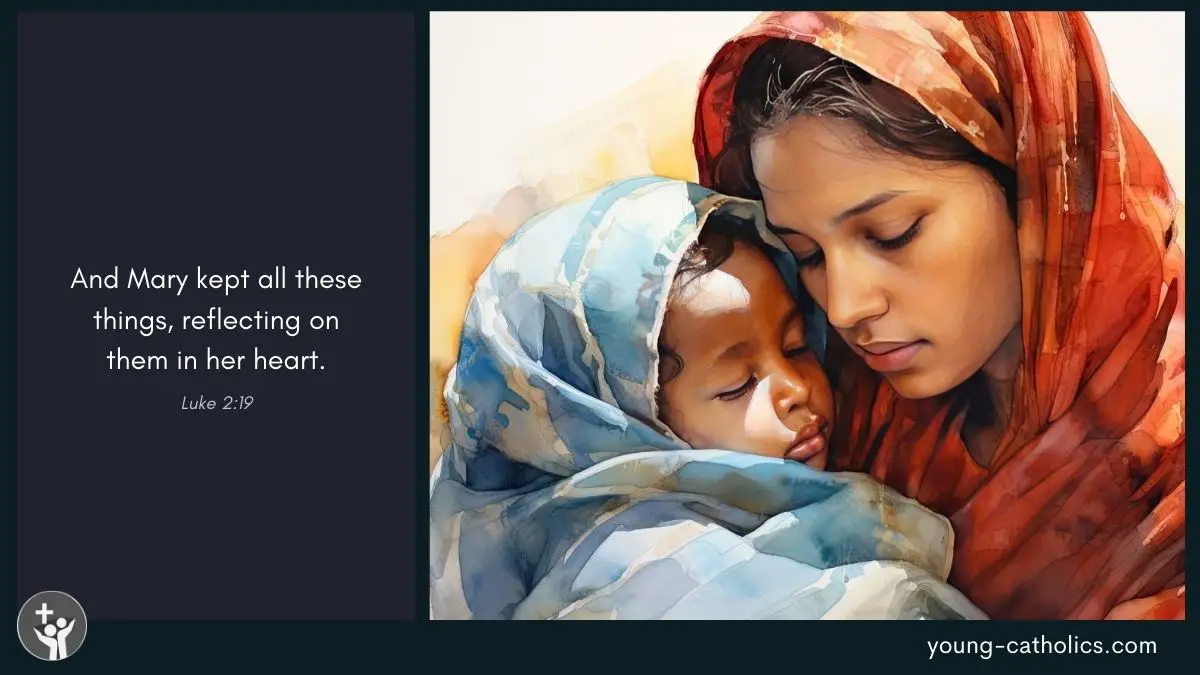
Verse to Remember: “And Mary kept all these things, reflecting on them in her heart.” (Luke 2:19)
Mother of Our Savior
The Solemnity of Mary, the Mother of God celebrates Mary’s special place in God’s plan. It honors her as the mother of Jesus, who is both fully human and fully God. This feast reminds us that through her yes, God entered our world to bring love, mercy, and peace.

This day invites us to reflect on the deep connection between Mary and her Son. Her trust in God shows the beauty of faith and obedience. She cared for Jesus with a mother’s love, guiding Him in His early years. Her example encourages us to welcome God’s work in our own lives with the same openness.
The Solemnity of Mary, the Mother of God also comes as we begin a new year. It gives us a moment to pause and seek Mary’s help in following her Son more closely. Through her care and prayers, we find comfort and hope as we walk into the days ahead, trusting that God is near.
Mass Readings for the Solemnity of the Blessed Virgin Mary, the Mother of God
- First Reading – Numbers 6:22-27: God commands Moses to instruct Aaron and his sons to bless Israel with divine protection, grace, favor, and peace, ensuring God’s blessings upon His people through them.
- Responsorial Psalm – Psalm 67:2-3, 5, 6, 8: May God’s merciful blessing and radiant presence make His ways and salvation known globally, leading nations in justice and guidance, inspiring universal praise and reverence.
- Second Reading – Galatians 4:4-7: In time’s fullness, God sent His Son to ransom us, granting us adoption as children. With His Spirit in our hearts, we are no longer slaves but heirs of God.
- Gospel – Luke 2:16-21: The shepherds, guided by the angel’s message, hurried to Bethlehem and found Jesus with Mary and Joseph. They shared the angelic revelation about the child, astounding all listeners. Mary treasured these events in her heart. The shepherds departed, praising God for the truth of their divine encounter. Jesus was named on the eighth day, as the angel had instructed before His birth.
And Mary kept all these things, reflecting on them in her heart.
Luke 2:19
Themes for the Solemnity of Mary, the Mother of God
This feast day celebrates the Blessed Virgin Mary in her role as the mother of our Lord Jesus. The first reading gives a traditional blessing. The second reading tells how Jesus was born of Mary to save us. And in the gospel, we hear how the shepherds visited the Holy Family after the birth of Jesus.
- Mary as the Theotokos: The celebration of Mary, the Mother of God (Theotokos), invites reflection on her unique role in salvation history as the mother of Jesus, God incarnate. It honors her obedience, faith, and integral part in God’s plan of salvation.
- God’s Blessing: The first reading from Numbers shows God’s blessing to His people. This reminds us of Mary’s blessed role in bringing Jesus into the world.
- Jesus as Son of God: The reading from Galatians speaks of Jesus being sent by God. This emphasizes Mary’s role in the mystery of the Incarnation.
- Obedience to God: Mary said yes to God’s plan. Her obedience is shown in the readings as an example for us to follow.
- Reflection and Pondering: In the Gospel, Mary reflects on the events of Jesus’ birth. This shows her deep faith and contemplation.
- Peace and Joy: The shepherds share the news of Jesus’ birth, bringing peace and joy. Mary’s role is central to this joyful message.
- Mother of the Church: Mary is seen as the mother of all believers. Her example guides us in our faith.
Reflecting on these themes during the Solemnity of Mary, the Mother of God, deepens the understanding of God’s blessing and care, our adoption as His children, the importance of obedience to God’s will, and Mary’s exemplary role in salvation history.
Homilies and Commentaries for the Solemnity of Mary, the Mother of God
- Taken For Granted (Fr. Mike Schmitz)
- Pondering God’s Actions (Order of Preachers)
- Glorifying and Praising God (Pray as You Go)
- Learning to Be Amazed (Jesuits)
- Keep It To Yourself (Dynamic Catholic)
- Mary Who Brings Christ to Us (Bishop Robert Barron)
- Saying Yes With Mary (USCCB)
- Do You Love Your Mother? (Jeff Cavins)
- Heart Filling and Heart Knowing (Fr. Richard Rohr)
- Children of God (Scott Hahn)
- More Homilies and Reflections for the Solemnity of Mary, the Mother of God
Taken For Granted
This homily reflects on how easily life and faith can be taken for granted, especially as time moves quickly from one year to the next. On the Solemnity of Mary, the Mother of God, Fr. Mike Schmitz invites listeners to slow down and notice what God has done. Using the story of a new father, he shows how love opens our eyes to details we once ignored. In the same way, the title Mother of God can sound familiar, yet it points to a deep truth about who Jesus is and how closely God has drawn near to us through Mary.
Fr. Mike connects this to Mary herself, who treasured events and reflected on them in her heart. He warns that a crowded life leaves no room for reflection, just as there was no room at the inn. He encourages making space through daily prayer, such as reviewing moments of gratitude, failure, and grace, so life and God’s work are no longer taken for granted.
Pondering God’s Actions
Silence and wonder shape this reflection for the Solemnity of Mary, the Mother of God. Fr. Clinton Honkomp invites us to notice the contrast between the shepherds and Mary. The shepherds rush out and speak with joy about what they have seen. Mary stays still. She listens. She gathers every moment, both joy and confusion, and holds it in her heart. Her way shows that faith grows through attention and quiet trust.
Fr. Honkomp explains that calling Mary the Mother of God protects the truth about Jesus. The child she holds is fully human and fully divine. Mary’s life becomes a steady yes to God, not only once, but again and again. The Solemnity of Mary, the Mother of God offers a gentle starting point. It invites space for prayer, careful listening, and openness to how God is already at work in ordinary moments.
Glorifying and Praising God
This Pray As You Go reflection for the Solemnity of Mary, the Mother of God invites quiet prayer at the manger. The reflection encourages gratitude and attentiveness as the year opens. It asks us to notice Christ’s presence and to become aware of what we carry into this season with thankful hearts.
Guided by Luke 2:16–21, the reflection places us beside Mary as the shepherds arrive and speak with joy. We are invited to see their wonder through her eyes and to hear their words as she does. Mary listens, holds everything close, and ponders in silence. Pray As You Go encourages staying with that stillness, then moving ahead to the naming of Jesus. The Solemnity of Mary, the Mother of God becomes a moment to praise the name of Jesus and to keep treasured faith close to the heart.
Music: Alma Redemptoris Mater by Juliano Ravanello and a vessel by Be Still the Earth
Learning to Be Amazed
This Jesuit reflection for the Solemnity of Mary, the Mother of God invites a return to wonder. Paul J. Shelton reflects on how easily amazement can be lost in daily life. Simple moments, like animals nesting in a garden or a child praying with sincerity, reveal quiet joy. These experiences mirror the Gospel scene, where the shepherds speak with excitement and those who listen are filled with awe.
Mary responds in a different way. She does not rush to speak. She holds what she hears and sees deep in her heart. Fr. Shelton points to her as a guide for the start of a new year. Instead of moving quickly past moments of grace, we are invited to notice them and treasure them. The Solemnity of Mary, the Mother of God becomes a call to stay open to God’s surprises and to recognize how love keeps showing up, again and again, in ordinary life.
Keep It To Yourself
This reflection for the Solemnity of Mary, the Mother of God invites a pause in a noisy world. Matthew Kelly reflects on Mary’s choice to keep events in her heart rather than speak right away. Surrounded by wonders that could easily be shared, Mary chooses silence and patience. Her example challenges a habit of constant posting and explaining. Some moments, Kelly suggests, need time to settle before they are shared.
Matthew Kelly uses a simple image to make the point clear. The heart is like a stove meant to build heat. Each time we rush to talk or post, the heat escapes. When we hold something close, reflection deepens and real change can happen. The Solemnity of Mary, the Mother of God becomes an invitation to quiet pondering. By keeping some things within, faith is given room to grow strong enough to shape how we live.
Mary Who Brings Christ to Us
This reflection for the Solemnity of Mary, the Mother of God centers on Mary’s yes and what it reveals about Jesus. Bishop Robert Barron explains that calling Mary the Mother of God protects the truth that God truly became human. All of God’s long work with Israel led to one young woman who freely welcomed that gift. Mary does not point to herself. Like the moon, she reflects the light of Christ.
Robert Barron also reflects on Mary as Mother of the Church. Since Christ is born through her, and the Church is His body, Mary continues her quiet work. She helps Christ be born in the hearts of believers. This does not replace Jesus or His saving work. Instead, it shows Mary’s role as one who prays, intercedes, and leads others closer to Him. The Solemnity of Mary, the Mother of God invites trust in her care and her steady guidance toward Christ.
Saying Yes With Mary
This reflection for the Solemnity of Mary, the Mother of God centers on the mystery of God becoming close to us. Deacon Bernard Nojadera reflects on Mary’s yes, which made room for God to enter human life. Through her trust, the eternal stepped into time and the divine entered our world. Calling Mary the Mother of God protects the truth that Jesus is fully God and fully human. This feast highlights how near God chooses to be.
Deacon Nojadera also points to Mary’s steady faith. Her yes was not a single moment, but a lifelong openness to God’s will. Even in uncertainty, she stayed faithful. Because of Christ, we are no longer slaves, but children of God and heirs to new life. The Solemnity of Mary, the Mother of God invites believers to look for God’s presence in quiet ways and to say yes with trust. With Mary’s help, we are called to be a blessing to one another and to live in God’s peace.
Heart Filling and Heart Knowing
In his homily for the Solemnity of Mary the Mother of God, Fr. Richard Rohr reflects on the uncertainties and potential disasters facing the world. He contrasts these worldly concerns with the spiritual perspective offered in the readings from Galatians and Luke, emphasizing a different way of knowing and living.
Fr. Rohr points to the heart as the biblical center of true knowledge, where mind, body, emotions, and soul converge. He encourages living in hope and trust, recognizing ourselves as adopted sons and daughters of God. This perspective, rooted in the heart, offers a way to find hope amidst global concerns, emphasizing faith and trust in God’s faithfulness and mercy.
Children of God
Scott Hahn reflects on the Feast of Mary, Mother of God, emphasizing Mary’s crucial role in salvation history. He highlights her humble acceptance of God’s will, which brought life and salvation through Jesus. He contrasts the ways God communicated in the past—through prophets and priests—to the present, where God reveals Himself through His Son, Jesus.
Hahn points out that through Jesus’ circumcision, He becomes part of Israel’s covenant, and we become God’s adopted children through Baptism. This fulfills God’s promise to bless all nations through Abraham’s descendants, a blessing now accessible to us through Mary and Jesus.
More Homilies and Reflections for the Solemnity of Mary, the Mother of God
The Power of ‘Yes’ (Fr. Mike Schmitz)
To Be Blessed and To Be a Blessing (Order of Preachers: Sr. Megan McElroy)
A Call to Kindness (Dynamic Catholic: Matthew Kelly)
Reflection for the Solemnity of Mary, the Mother of God
The Solemnity of Mary, the Mother of God, is a time to reflect on Mary’s unique role in God’s plan of salvation. Through her, Jesus, God made flesh, entered the world to redeem us. This day honors her faith, obedience, and the special place she holds in our faith. These reflections will help us understand and appreciate Mary’s role and its significance for our lives.
Mary’s Role in God’s Plan
The Solemnity of Mary, the Mother of God, is a special day to honor Mary’s role in God’s plan of salvation. Paul’s letter to the Galatians tells us that God sent His Son, born of a woman, to redeem us. This woman is Mary, and through her, Jesus came into the world. This shows how important Mary is in our faith.
Mary’s acceptance of God’s plan allowed the Word to become flesh. Jesus, both God and man, bridged the gap between us and God. This event fulfills ancient prophecies and shows God’s great love for us. On the Solemnity of Mary, the Mother of God, we reflect on this mystery and what it means for us.
We also learn that we are adopted as God’s children. Through Jesus, we are no longer bound by the law but are part of God’s family. This adoption is more than a legal status; it is a call to a close relationship with God. We can call Him “Abba, Father” just like Jesus did.
The Solemnity of Mary, the Mother of God, invites us to live as true children of God. We are called to recognize our new identity and live in the light of God’s love. As we honor Mary, we are encouraged to deepen our relationship with God and follow her example of faith and obedience.
A Humble Birth and a Faithful Heart
In a quiet, humble stable, Mary, the Mother of God, held her newborn son. This was the culmination of the angel’s message and a miraculous conception. She had given birth to Jesus, a moment that filled her heart with wonder. The simplicity of this scene was interrupted by shepherds arriving to see the baby.
These shepherds were not important people. They were simple, hardworking men. Yet, angels appeared to them, announcing the birth of Jesus. This shows that God’s kingdom values the humble and the lowly. Mary’s reaction to the shepherds is a powerful example for all believers. She did not panic or doubt but stayed calm and welcoming.
Mary listened to the shepherds’ story of angels singing in the night. Instead of being overwhelmed, she pondered these things in her heart. This shows her deep faith and trust in God’s plan. She embraced the extraordinary events with an open heart, ready to follow God’s mysterious ways.
Mary teaches us that faith doesn’t remove confusion or uncertainty. Instead, it helps us reflect and understand God’s actions. The Solemnity of Mary, the Mother of God, invites us to trust and accept God’s plans, even when they are beyond our understanding. By following Mary’s example, we learn to have a strong and open-hearted faith.
Mary as the Theotokos
The Solemnity of Mary, the Mother of God, celebrates Mary as the Theotokos, the Mother of God. This title honors her special role in salvation history as the mother of Jesus, who is God made flesh. Mary’s willingness to accept God’s plan with faith and obedience makes her an essential part of God’s plan to save humanity.
Mary’s title, Theotokos, reminds us that Jesus is both God and man. By giving birth to Jesus, Mary brought God into the world in a human form. This mystery shows how important Mary is in God’s plan. Her acceptance and faith allowed God’s plan to unfold.
The Solemnity of Mary, the Mother of God, also highlights her faith and obedience. When the angel told her she would have a son, she said yes without hesitation. Mary trusted God’s word and became the mother of our Savior. Her example teaches us to trust and obey God in our own lives.
Celebrating Mary as the Theotokos encourages us to reflect on her role and its impact on our faith. Mary is not only the mother of Jesus but also a model of faith and trust for all believers. By honoring her, we recognize the important part she played in our salvation and are inspired to follow her example.
The Solemnity of Mary, the Mother of God, gives us a chance to honor Mary’s essential role in bringing Jesus into the world. Her faith and obedience set a powerful example for all believers. As we reflect on her life and her impact on our faith, we are encouraged to deepen our own relationship with God and to live with the same trust and openness that Mary showed.
Prayer
Heavenly Father, we thank you for the gift of Mary, the Mother of God. Help us to follow her example of faith and obedience. Guide us to trust in Your plan and to live as Your true children. Amen.
Reflection Questions for the Solemnity of Mary, the Mother of God
- What does Mary’s title, Theotokos, mean to you?
- How does Mary’s acceptance of God’s plan inspire you?
- In what ways can you follow Mary’s example of faith and obedience?
- How does reflecting on Mary’s role in salvation history deepen your faith?
- What can you learn from Mary’s calm and welcoming response to the shepherds?
- How does Mary’s trust in God’s plan encourage you in times of uncertainty?
- What does it mean to be adopted as God’s children through Jesus?
- How can you live out your identity as a child of God?
- What can you do to deepen your relationship with God, inspired by Mary’s example?
- How does celebrating the Solemnity of Mary, the Mother of God, impact your spiritual life?
Resources for the Solemnity of Mary, the Mother of God

Yes No Game
Incorporating “The Yes No Game” into your youth ministry session on the Solemnity of Mary, the Mother of God, provides an interactive and memorable way to explore Mary’s profound ‘Yes’ to God.
This simple yet engaging game helps youth pay attention to the words they use. It moves fast and keeps everyone alert. Players must think before they speak, which leads to better listening and stronger focus. The game works well as an icebreaker and helps quieter youth feel included. It also shows how often we answer without thinking and how habits shape the way we speak with others.
This game also points to a faith lesson. Catholics are called to say yes to God each day, even when it feels hard. Mary’s yes shows trust and openness to God’s plan. As youth play, they can reflect on their own responses to God’s call. The game gently raises questions about fear, trust, and what it means to follow Christ with an open heart.

Why Do Catholics Pray to Mary? A Lesson Plan
For a lesson on the Solemnity of Mary, the Mother of God, discussing why Catholics pray to Mary and the saints can be enlightening.
Many young Catholics wonder why we pray with Mary and the saints. Some worry this looks like worship. This lesson plan helps clear up that confusion. It explains the difference between honoring holy people and worshiping God alone. Students learn that Catholics ask Mary and the saints to pray with us, not instead of God. This makes the practice easier to understand and talk about with others.
The lesson also helps youth grow in confidence and prayer. Through discussion, scripture, and simple activities, they see how the saints are part of God’s family. They learn that asking for prayers from heaven is like asking friends on earth. By the end, students understand that reverence points us toward God and helps us trust Him more fully.

The Book of Numbers: Blessing from the Covenant God
This passage from Numbers shows God’s deep desire to bless and protect His people. It comes during Israel’s journey through the wilderness, where God gives laws and guidance to form them into a holy nation. The blessing through Aaron reflects God’s covenant love, reminding Israel that His presence brings peace and favor.
Within the larger message of Numbers, this blessing expresses God’s faithfulness even amid Israel’s struggles and wandering. It shows that their identity and hope come from God’s care, not their own strength. As we celebrate the Solemnity of Mary, the Mother of God, we are reminded that God’s blessing reaches its fullness in Jesus, born through Mary.

Psalm 67: A Prayer for All Nations
This psalm is a song of joy asking for God’s mercy and blessing to be known by every nation. It reflects the hope that Israel’s relationship with God will reveal His justice and guidance to the whole world. The psalmist celebrates a God who desires not only to bless His people but to bring salvation to all.
In the wider context of the Psalms, this prayer shows the movement from personal faith to a global vision of God’s reign. It calls all people to praise the Lord together. On the Solemnity of Mary, the Mother of God, this psalm reminds us that through Jesus, born of Mary, God’s salvation indeed reaches every nation.

The Letter to the Galatians: Children and Heirs through Christ
In Galatians, Paul explains that Jesus’ coming fulfills God’s promise of freedom. Through Christ, we are no longer bound by the law but are adopted as God’s children. This reading highlights God’s timing and love, sending His Son to make us heirs and giving us the Spirit to cry out, “Abba, Father.”
The letter to the Galatians speaks of freedom through faith, not works. Paul urges believers to live as children of promise, not slaves to old ways. On the Solemnity of Mary, the Mother of God, this message reminds us that Mary’s yes brought this new life to all humanity, making us part of God’s family.

The Gospel of Luke: The Shepherds and the Child
Luke’s Gospel often highlights God’s love for the humble. The shepherds’ visit reflects Luke’s focus on joy, inclusion, and the Good News being shared with ordinary people first. They find the promised Savior and spread the message, showing the natural response to encountering God’s work.
Throughout Luke, we see a theme of salvation and peace extended to all. Mary treasures the events, showing her deep faith and reflection. The naming of Jesus fulfills God’s word through the angel. On the Solemnity of Mary, the Mother of God, we see her role in this mystery of salvation as she presents the child who brings peace to the world.
Social Media Graphics and Bulletin Artwork
If you would like an image to be made available as a specific product (card, poster, mug, etc.) or as an extra high resolution image for personal use just post a comment about what you want and we will create a link to our online store for you.
Embrace of Peace

This artwork, created for the Solemnity of Mary, the Mother of God, shows the tender bond between Mary and the newborn Jesus. It reflects the peace and blessing spoken in Numbers 6:22–27 and the joy of the shepherds in Luke 2:16–21.
Use this image to inspire reflection in bulletins, newsletters, or youth ministry materials as we welcome a new year filled with God’s grace and mercy.
Paid subscribers may download this file without watermarks for use in bulletins, social media, newsletters, etc. You must be logged in as a paid subscriber to access the file.
Only current paid subscribers have the rights to use the artwork.
Questions and Answers for the Solemnity of Mary, the Mother of God
What is the Solemnity of Mary, the Mother of God?
This is a liturgical feast in the Catholic Church celebrating Mary’s role as the mother of Jesus Christ, who is both God and man.
What date is the Solemnity of Mary, the Mother of God ?
It is celebrated annually on January 1.
Why is the Solemnity of Mary, the Mother of God important?
This solemnity highlights Mary’s unique role in the history of salvation and her divine motherhood, which is central to Christian belief.
Is the Solemnity of Mary a Holy Day of Obligation?
Yes, in most countries, including the United States, it is a Holy Day of Obligation, meaning Catholics are required to attend Mass. However in the US, when the Solemnity of Mary falls on Saturday or Monday, the obligation to attend Mass on that day is canceled.
How is the Solemnity of Mary, the Mother of God, different from the Immaculate Conception?
The Solemnity of Mary celebrates her role as the mother of Jesus, while the Immaculate Conception refers to Mary being conceived without original sin.
Can non-Catholics participate in the celebration of the Solemnity of Mary?
Yes, non-Catholics are welcome to attend the Mass on the Solemnity of Mary and participate in the celebration, though they cannot receive Communion.
How does the Solemnity of Mary, the Mother of God emphasize Mary’s role in the Church?
It underscores her unique position as the Theotokos, or God-bearer, and her exemplary faith and obedience to God’s will.
What is the significance of celebrating the Solemnity of Mary on January 1st?
January 1st, being the octave (eighth day) of Christmas, ties Mary’s role directly to the birth of Christ, emphasizing the start of a new year in light of Christ’s birth and Mary’s motherhood.
What does “The LORD bless you and keep you” mean in Numbers 6:24?
It means God will take care of us and protect us. On the Solemnity of Mary, the Mother of God, we remember that God took care of Mary and she trusted Him.
Why is peace important in the blessing from Numbers 6:26?
Peace is a sign of God’s presence and care. The Solemnity of Mary, the Mother of God, reminds us that Mary brought the Prince of Peace into the world.
What does it mean that God sent His Son “born of a woman” in Galatians 4:4?
It means Jesus was born as a human, with Mary as His mother. The Solemnity of Mary, the Mother of God, reminds us of this important truth.
What does it mean to be heirs according to Galatians 4:7?
It means we are God’s children and share in His promises. The Solemnity of Mary, the Mother of God, reminds us that through Jesus, we are part of God’s family.
What does “fullness of time” mean in Galatians 4:4?
It means the right moment in God’s plan. The Solemnity of Mary, the Mother of God, celebrates that moment when Jesus was born.
Why did Mary ponder the shepherds’ message in her heart in Luke 2:19?
Mary thought deeply about what the shepherds said. On the Solemnity of Mary, the Mother of God, we learn to think deeply about God’s actions in our lives too.
What is the significance of the shepherds finding Mary, Joseph, and the baby in the Gospel reading?
It shows that Jesus was born in humble circumstances. The Solemnity of Mary, the Mother of God, reminds us that God works through humble people.
How does Mary’s example of obedience apply to our lives?
Mary said yes to God’s plan without hesitation. The Solemnity of Mary, the Mother of God, teaches us to trust and obey God in our lives.
How can we reflect like Mary on the Solemnity of Mary, the Mother of God?
We can take time to think about God’s blessings in our lives. The Solemnity of Mary, the Mother of God, encourages us to be thoughtful and prayerful.
Mary’s Role in God’s Plan of Love
The Solemnity of Mary, the Mother of God, celebrates Mary’s essential role in bringing Jesus, God made flesh, into the world. Through her faith and obedience, Mary embraced God’s plan and became the Mother of Jesus. This feast honors her as the Theotokos, a title that recognizes Jesus as both God and man.
The Gospel reading reminds us of Mary’s humility and faith. After Jesus’ birth, she welcomed the shepherds and listened to their story about the angels. Mary reflected on these events in her heart, showing her trust in God’s mysterious ways and her willingness to follow His will.
The readings also highlight God’s blessings and the invitation to eternal life. Through Mary, Jesus came to redeem us and adopt us into God’s family. Her acceptance of this role teaches us to trust God’s plans and live as His children.
By reflecting on The Solemnity of Mary, the Mother of God, we can learn from Mary’s example of faith and obedience. Her life inspires us to deepen our trust in God and to embrace His blessings in our lives.
Your Turn
Take time to reflect on The Solemnity of Mary, the Mother of God. How does Mary’s faith and trust in God inspire you? Think about her role in bringing Jesus into the world and what that means for your life.
Share your thoughts and reflections in the comments below, and let’s support one another in growing closer to God.
Leave a Reply